The industry describes a company two different ways, and the two descriptions do not always point to the same conclusion. The first is value-chain-layer nomenclature — materials (cathode active material, electrolyte, separator), cell manufacturer, pack/BESS integrator, EPC/developer — which describes a company's position in the physical supply chain. The second is chemistry-and-process classification — which cell chemistry a company actually makes or sources, and how far up the compaction-density and yield-curve ladder that chemistry sits (§1, §4) — which describes what a company actually keeps versus rents out. A company can be a "cell manufacturer" by corporate description and still be running an imported-technology pack-assembly line in practice; a materials supplier several layers upstream, invisible in most "India battery capacity" headlines, can hold more durable pricing power than the cell-maker above it, if what it holds is the qualified cathode material that cell-maker actually needs.
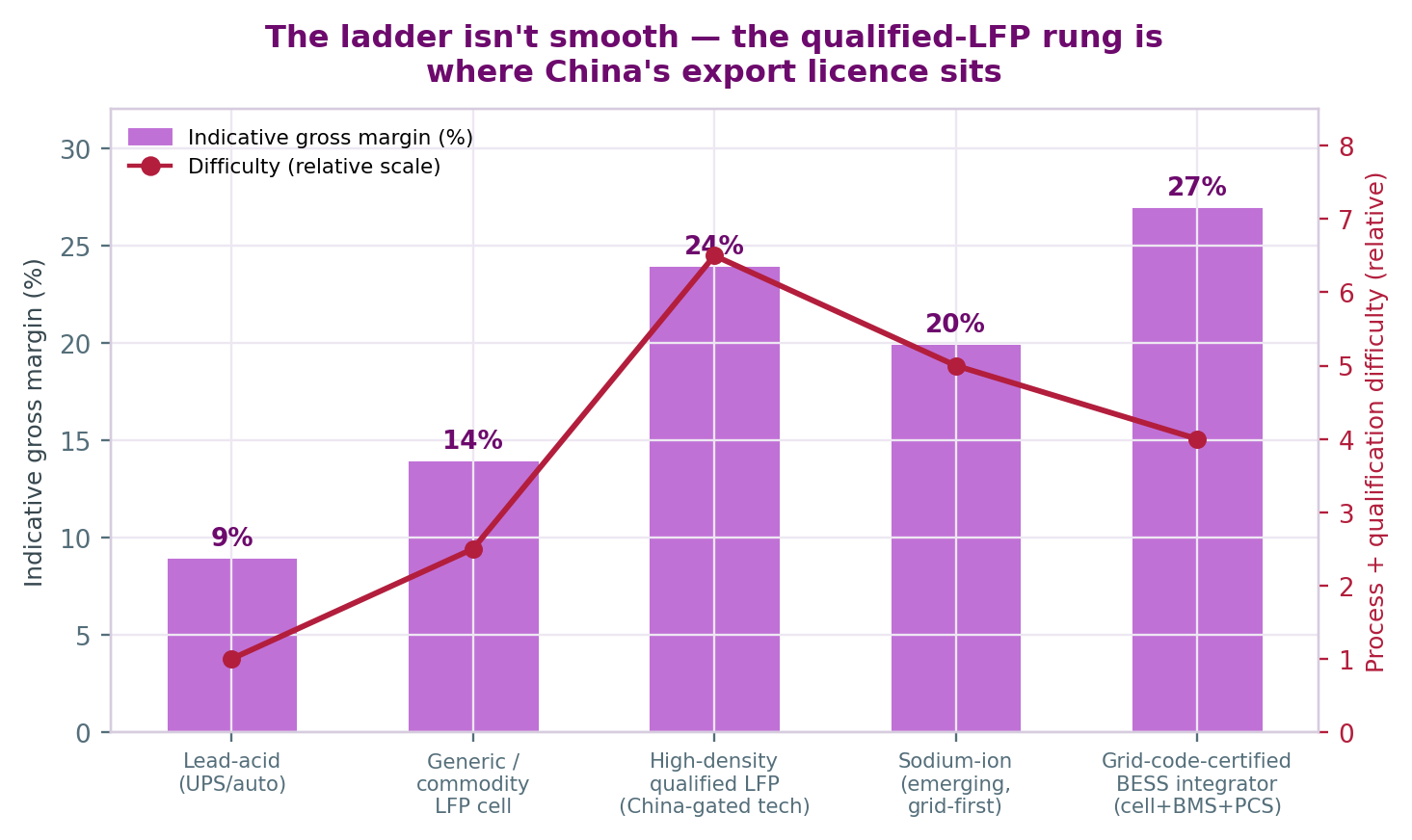
Sodium-ion is the clearest case. It sits below LFP on an energy-density basis, yet it is not gated by China's July 2025 restriction, can largely be built on the same production lines as LFP, and removes lithium supply-chain exposure entirely — three reasons India's newest entrants (including a Reliance-linked Faradion sodium-ion line, and JSW's newly announced Pune R&D centre, which names sodium-ion explicitly alongside lithium-ion in its Phase 1 scope) are treating it as a genuine strategic hedge rather than a lesser chemistry. Size and chemistry-ladder position do not reliably predict a company's actual grid-storage exposure in this industry; what a company's revenue is actually built on does. Keep this in mind through §9 — market capitalisation, on its own, tells you almost nothing about where a company actually sits on the ladder above.
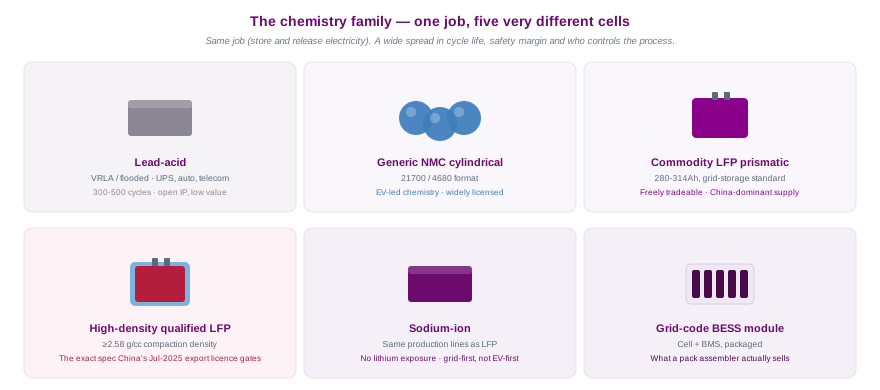
What a value-chain company can actually be selling or sourcing, from open-IP commodity to the exact spec China's export licence gates.
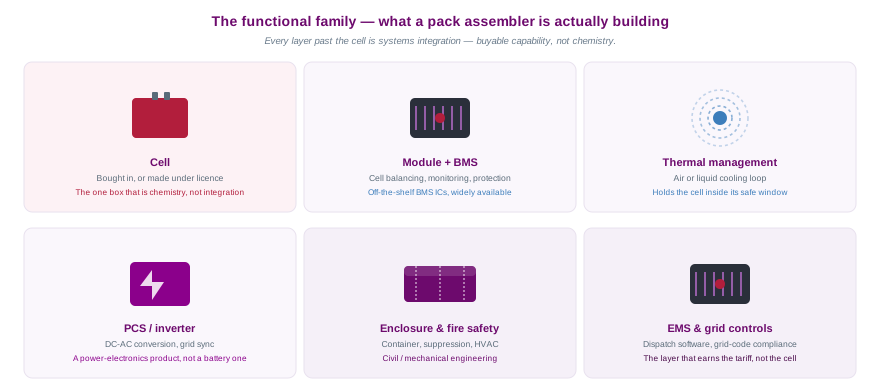
The layers a pack assembler is actually integrating on its way from bought-in cell to grid-connected container — five of these six boxes are systems engineering, not chemistry.